When you can see who is speaking, where they are and what is happening, Spanish stops being a collection of words to decode. The story is already giving you clues.
That’s the idea behind Comigo: original Spanish comics where reading, listening, translation and practice all happen inside the story.

In a comic, language doesn’t arrive alone. A character’s expression, an object they’re holding, the place they’re standing and what happened in the previous panel all help you make sense of what you’re reading.
Pictures give unfamiliar Spanish context. You can often understand the direction of a sentence before you know every word.
Reading shows you how Spanish looks. Hearing the same dialogue gives you pronunciation, rhythm and tone.
There’s a reason to understand the next sentence: you want to know what happens next. Curiosity becomes part of the learning process.
Don’t worry about understanding every word. Look at the picture, read the Spanish and see how much you can work out from the scene — then tap a speech bubble to hear it and check yourself, just as in the app.
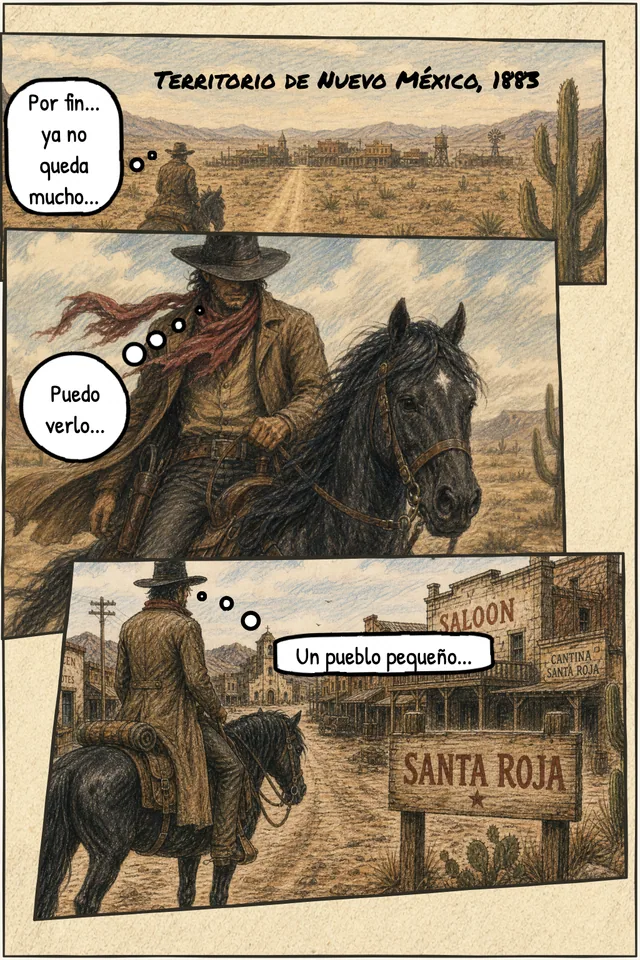
Read “Un pueblo pequeño” as a full exercise, with the transcript, vocabulary and translation →
Traditional reading practice can leave you reaching for a dictionary every few words. Comics add another source of information: the scene itself.
You begin by making a reasonable guess from the picture and the story. When you need help, you check the language. Over time, more of those guesses become understanding.
You don’t need to understand every word to understand what’s happening. And wanting to understand what’s happening gives you a reason to learn the words you don’t know.
What does research say about pictures and language learning? →
Follow the story in Spanish, one bubble at a time.
Hear the dialogue spoken with tone and character.
Tap unfamiliar words and reveal explanations or translations when you need them.
Say the dialogue yourself and practise producing the Spanish, not just recognising it.
After the episode, work with the vocabulary and sentences you have just encountered in the story.
A western. A spy thriller. A dystopian mystery. A time-travel adventure. Comigo uses different kinds of stories so Spanish reading practice doesn’t have to feel like textbook reading practice.

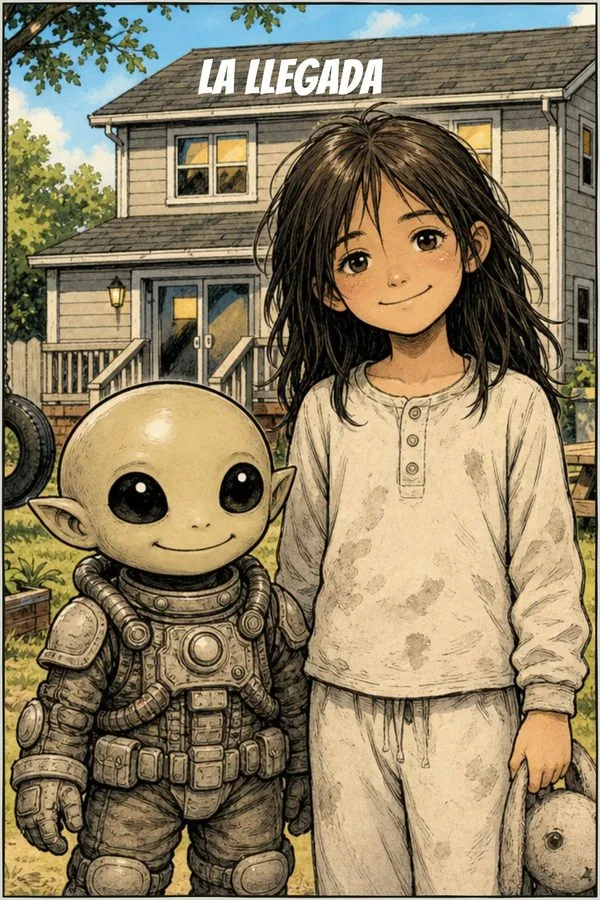

Start reading Spanish with Comigo. Explore the stories, listen to the characters and discover how much you can understand when Spanish has a story around it.